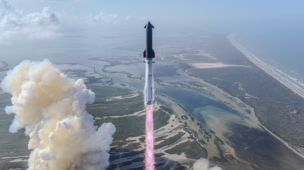
Winding Down Falcon 9 and What It Will Take to Shift Payloads to Starship
This content is restricted to subscribers
 2026 Payload Pro | All Rights Reserved.
This content is restricted to subscribers
Hundreds of space companies we have all grown to know and love were founded—and raised billions of dollars—on the assumption that SpaceX had solved launch with Falcon 9, all but guaranteeing reliable, predictable access to orbit. But that premise is now on shaky grounds, turning the future of many satellite businesses into an existential question.
Rocket Lab is buying Iridium, picking its application layer, and becoming the second fully vertically integrated space company.
SpaceX is exceptionally good at space.
Falcon 9’s rideshare pricing has increased 40% over the last five years.
We forecast that SpaceX’s revenue will increase from $15B in 2025 to $23.8B in 2026, driven by Starlink’s customer base doubling from 9.2M to 18.4M.
Payload is back with our 2025 SpaceX revenue model build.
2025 was the year of a convergence of tailwinds in the space industry.
Starship’s clamshell fairing may still be a half-decade away, but SpaceX could deploy customer satellites via Starship’s thin pez-dispenser deployer sooner than you think.
In 2017, SpaceX built 13 new boosters for its 18 total Falcon 9 launches—a 72% new booster rate. So far this year, the company has built seven new boosters for 124 Falcon launches—a 6% new booster rate.