The Most Active Space VC Firms: Who’s Leading and Backing Space’s Top Startups?
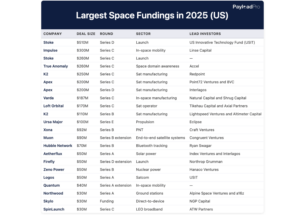
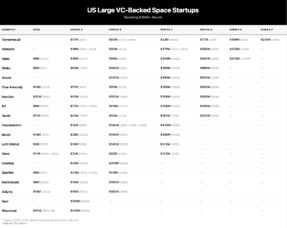
Space companies have turned into serial fundraisers, often raising every year like clockwork and never really ever exiting the market.
There is good reason for this.
 2026 Payload Pro | All Rights Reserved.
Space companies have turned into serial fundraisers, often raising every year like clockwork and never really ever exiting the market.
There is good reason for this.
This content is restricted to subscribers
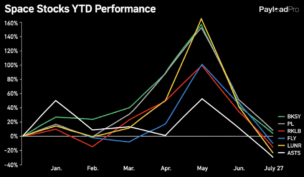
Space stocks did nothing but go vertical in the first half of the year (many were up well over 100%).
Momentum was driven by SpaceX’s IPO and valuation, increased geopolitical conflict with the war in Iran, orbital-data-center hype, and a broader market pivot from software into hardware businesses.
Introducing the new crop of early-stage space startups.
The year was 1993, and Lockheed was without Martin, Northrop was without Grumman, and Boeing had not yet acquired McDonnell Douglas. The defense industry had a diverse set of suppliers, with over 50 defense primes competing for government contracts.
SpaceX’s IPO prospectus is here.
The investor playbook has flipped: In the era of AI, Asset-light, high-margin good businesses (software) start to look bad, while greasy, capital-intensive, bad businesses (hardware) now look good. That’s just as true in space as anywhere else.
Another space business is hitting public markets.
2025 was the year of a convergence of tailwinds in the space industry.
Europe’s surging space investment continued at the 2025 Council of Ministers, when member states approved a €22B budget for ESA over the next three years of agency operations, a near 30% increase from the 2022 budget.