The Most Active Space VC Firms: Who’s Leading and Backing Space’s Top Startups?
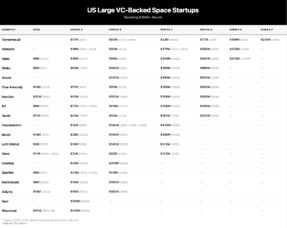
Space companies have turned into serial fundraisers, often raising every year like clockwork and never really ever exiting the market.
There is good reason for this.
 2026 Payload Pro | All Rights Reserved.
Space companies have turned into serial fundraisers, often raising every year like clockwork and never really ever exiting the market.
There is good reason for this.
Starcloud CEO Philip Johnston has been particularly open about Starcloud’s business model and targeted economics (great for all us space + numbers nerds) through dozens of media interviews and thousands of good ol’ spicy social posts.
There has been a lot of speculation about how SpaceX is going to achieve its goal of moving from D2C dead zone coverage to taking AT&T, T-Mobile, and Verizon head-on, tapping into a hundreds of billions in revenue opportunity.
We spoke with a Space Force official on background to better understand how startups should pitch the service for award opportunities. What are the green flags in applications? What are the red flags?
This content is restricted to subscribers
6 tidbits from SpaceX’s first earnings call, ranked 👇:
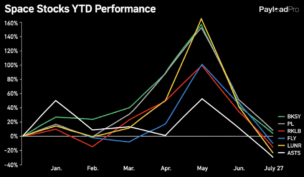
Space stocks did nothing but go vertical in the first half of the year (many were up well over 100%).
Momentum was driven by SpaceX’s IPO and valuation, increased geopolitical conflict with the war in Iran, orbital-data-center hype, and a broader market pivot from software into hardware businesses.
The FCC is proposing opening unlicensed Bluetooth and Wi-Fi frequencies for space-based comms.
What should we expect the flight cadence ramp to be for next-gen reusable rockets like New Glenn, Neutron, Nova, Terran R, and Eclipse?
Hundreds of space companies we have all grown to know and love were founded—and raised billions of dollars—on the assumption that SpaceX had solved launch with Falcon 9, all but guaranteeing reliable, predictable access to orbit. But that premise is now on shaky grounds, turning the future of many satellite businesses into an existential question.